roosterema
patreon
Art and gifs in this post is from Atlus' Shin Megami Tensei series.
Howdy y'all, here's just a little random thing I came up with while working on a bigger announcement (yes yes you'll see more soon!)
So you know by now that I'm a bit of a Shin Megami Tensei/Persona fan, and recently I've been playing some OSR dungeon crawling with a group of friends.
Part of me has always felt like there were several points in common between SMT and OSR - starting with dungeon crawling, and up to weird fantasy designs and an overall brutal and bleak perspective on reality. Not to mention the whole Law vs Chaos thing, of course.
So today I present you... my rules for having demon contracts in OSR games!

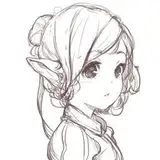
No guarantee your demons will be this cute, tho.
Let's go!
The Core Assumption: Demons (or Shadows, or Summons, or whatever) are largely based on Hirelings/Followers, and on the way these characters function within your system of choice.
Contracts
Demons are more powerful than normal hirelings, and thus each Demon must be bound by a Contract. You can only command a Demon if you hold their Contract, and each Contract takes up one space in your backpack (if you use weight instead of inventory space, it's about the same heft as a book).
Maximum Number of Bound Demons
Much like hirelings, Demons are limited. At any time, the maximum number of Demons you can have bound is equal to your Wisdom modifier (minimum of one). If your system doesn't feature Wisdom, any similar attribute that can range from 1 to 4 or 5 and is tied to awareness, sixth sense and communion with unseen forces will do.
If your character is an occultist, you might want to tie their maximum number of bound Demons to Intelligence: this can also make sense. It all depends on whether you want demon summoning to be tied to "lore and study of formulae" (INT) or to "being smart enough to trick demons and keep them in check" (WIS).
Demon Stats
Demons follow whatever rules creatures follow in your game, but a few special rules always apply:
How to write a Contract
This isn't something I'll give you rules for. Every Demon will have different needs, specify different conditions, and so on. Research the demonic tradition and identify the key aspects of the entity: Agares might prize contact and familiarity with the earth, Forneus might appreciate rhetoric and social occasions, and so on.
Maybe one day I'll compile a list of demons in a format such as...
Decarabia (3 HD, 15 HP)
Appears as a pentagram star, changing into a man under the conjurer's request.
Attacks: Star ray +3, d6 damage
Spells: Detect Magic, Identify Herbs and Poisons, Change Shape (self only, can change into a bird or into a human)
Contract Conditions: Decarabia demands to be exposed to new knowledge, if summoned.
Alignment and Personality: Chaotic, will always prioritize what piques his curiosity over what the Binder needs.
But before that, you can still find a hundred weird summonable entities here in this Coins and Scrolls blog post!